
LIVE COACHING replay
With Ethan Willis
Less Ego, Greater Impact
Ethan Willis is a coach, entrepreneur, and author who has spent more than two decades helping the world's most driven people break through the ceilings that talent and effort alone cannot move.
Known for his warmth, his generosity of attention, and his refusal to make the work about himself, Ethan's message is rooted in a single reframe: humility is not weakness, it is a multiplier. In his new book, Humble Power, he draws on twenty years of research and coaching to show how leaders who stay teachable, honest, and in service to something bigger than themselves create deeper trust, stronger teams, and results that keep growing whether they are in the room or not.
Through his coaching, teaching, and writing, Ethan helps people trade ego for impact and discover a source of strength beyond their own.
Learn more at humblepower.com
Chapters
- Welcome + Introduction(00:00:00 - 00:04:18)
- Humility, Honesty, and Humble Power(00:04:18 - 00:20:16)
- When Purpose Is Bigger Than Fear(00:20:16 - 00:28:22)
- Seeing Clearly With a Humble Mind Map(00:28:22 - 00:41:58)
- Trust, Empowerment, and Clarity in Leadership(00:41:58 - 00:49:08)
- Less Ego, More Impact, Better Results(00:49:08 - 00:52:37)
- Humility in Relationships + Closing Reflections(00:52:37 - 00:55:56)
Meet Michael our Head Coach and CEO
Fifteen years of practice, not theory.
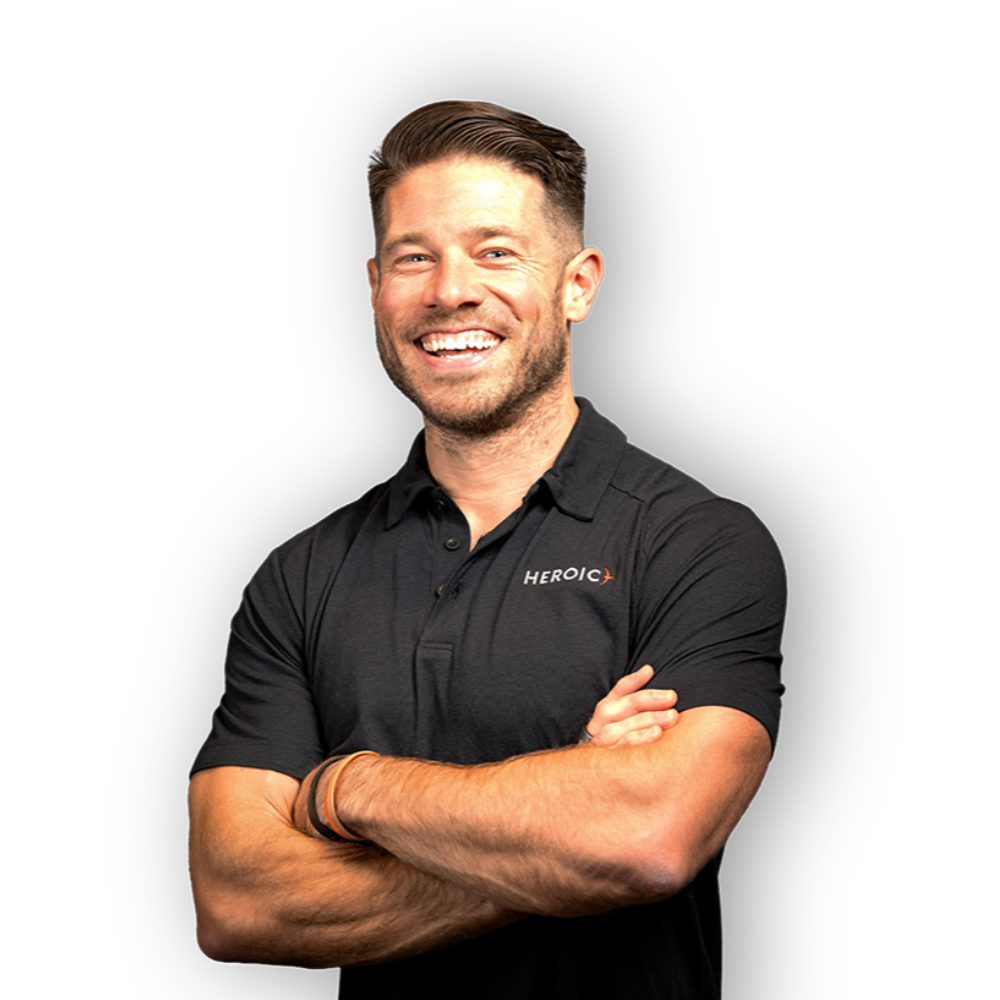
Michael Balchan has practiced and applied the Heroic framework every day for fifteen years, working alongside founder Brian Johnson through every program Heroic has built.
He is a Harvard-trained behavioral economist and performance coach who has helped thousands of individuals and organizations operationalize the Heroic framework. He blends cutting-edge psychology with timeless principles of human flourishing, equipping leaders and coaches with tools to create meaningful, lasting impact.
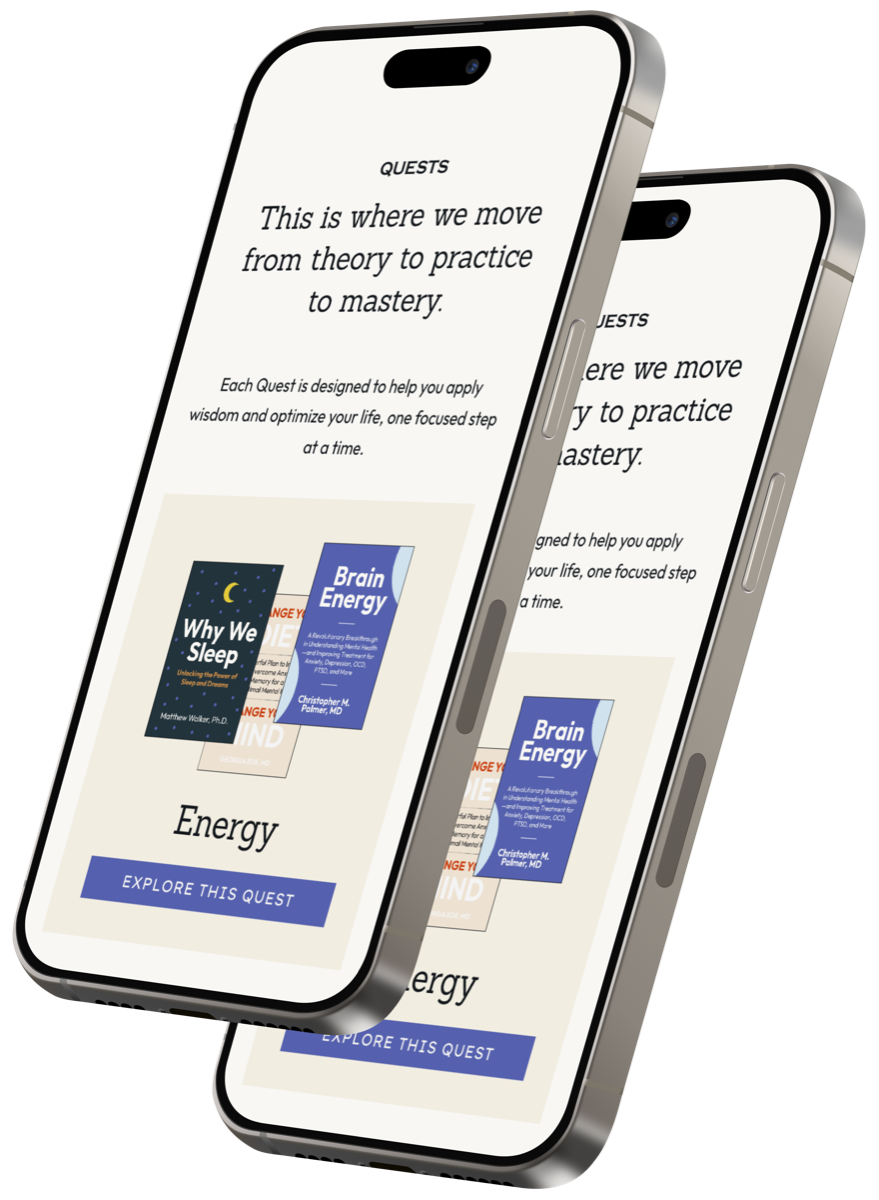
Turn these ideas into a daily practice with Heroic OS.
Heroic OS is the app that gets you doing what you already know. You get 50+ guided Quests, including Energy, Habits, Stoicism, Purpose and Leadership, with morning and evening bookends that keep your daily commitments on track.
In a randomized controlled trial, people using Heroic moved from the 53rd to the 70th percentile of flourishing in 30 days.
700+ Philosopher's Notes and 50+ guided Quests, all in one app.
Start your 7-day free trial →7 days free, then $149 a year or $18 a month. We take a card up front, and you can cancel any time before day 7.
Full Transcript
Michael Balchan 00:00
Kevin, you win. I was talking about you the other day, Kevin. The question you asked-we just had Carolyn Freyer Jones on earlier this week, Ethan and Kevin, and she had a great interaction. But great to see you, Michael Ward. Good to see you, sir. You-you probably do. You know, Ethan. Have you guys hung out before? You-you-you may have Paul. Good to see you, Keegan, Cowman, Lou, Kelly, Michael. Fired up today.
Ethan Willis 00:28
I do recognize some of these names here:
Michael Balchan 00:31
Marlena, Maxine, Robin. We got we got a good group here, and then of course everyone checking out the recording. But fired up, heroic coach, luminaire guest, faculty, coaching excellence, Ethan Willis, CEO of Growth PartnersGrowth.com, author, new book, Humble Power. I was celebrating this book ahead of time. I'm not finished. Full disclosure: I'm about two thirds of the way through, but I'm really, really, really enjoying it. I've read a lot of books. I've also read a lot of philosophers' notes on a lot of books. Have have gotten a lot of similar content, and and yet there's something in this book that feels unique, that feels different, that it feels like it's it's plugging a hole that I didn't realize was there. And and when I first saw the book came out and humble power, I thought there's there's one person who I think really captures and reflects humble power, and that's you, Ethan. I was so glad in Brendan's foreword. So Brendan Burchard wrote the foreword. I loved it. I smiled as he was celebrating you, and he said, "You know, I'm only doing this because Ethan won't want me to celebrate him in this way. But he he said one of the lines in particular was like you play a lot of roles in your life. You're a businessman. You're a partner. You're a father. You're you're on board. You're a leader. You're a coach, and you're the same in all of them. Same person that that that who you see is who you're going to get, and and you're the same in all. And knowing that humility and honesty go together, which we'll come back to later. But to me, that was such a such a beautiful, powerful compliment that you're not shaping yourself for the environment, but you really are who you are, and you're showing up with this commitment to service and love and to lifting other other people. So I wanted to give Brennan the shout out. Thanks for the introduction, and I just so loved the way he celebrated you, and and you know that's that's been my experience every time we've interacted. So I'm really looking forward to today.
Ethan Willis 02:27
Well, Michael, thank you so much. It's an honor to to be here and see all these all these people and faces here. Just want to say I'm just honored to be here with you. I know the heroic community. Brian and I have had some wonderful interactions, and Michael and I have become dear friends. And so I'm just grateful to be here and to serve you in whatever way that I can. And just want to respond to Brendan's forward. My goodness, he was so he was so encouraging of me getting this book out, it's taken me almost three and a half, maybe even four years, and he was there the whole time. Ethan, humble power, how we doing? How we doing? And so we all need that person in our life, and so grateful to my dear friend Brendan. Give a shout out to him as well. So thank you, Michael.
Michael Balchan 03:20
Lifting one another up, right? That's that's a big part of the game. I also wanted to, before we get into the details, I really appreciated your note for the audiobook listeners. So at the beginning, you do a little quick riffle, like for my audiobook friends, congrats! It just felt I felt so seen and heard and acknowledged, like that was my experience and how I was fitting in the reading, and you also made the great comment. You've you've facilitated a lot of coaching sessions, and you've been able to see patterns with what makes somebody grow or not grow. And one of the things is someone taking agency and ownership of their growth.
Ethan Willis 03:55
Yes,
Michael Balchan 03:56
and so you encourage me as an audiobook listener to congratulations on taking agency and ownership of your growth by this commitment to learning, and also press pause and take some notes sometime. So I just I really appreciate I hadn't experienced that sort of audiobook special thing before, and it just made me feel so touched. So wanted to celebrate you for that too.
Ethan Willis 04:16
Oh, thank you, thank you.
Michael Balchan 04:18
So let's talk about humility. What is humility? The the origins of the word. Why write this book called Humble Power? Start with this humility.
Ethan Willis 04:32
Yeah. Well, thank you for asking that question. And I would say first of all, humility is this root word of humility is humus, which means ground or dirt. So in many ways, it is this ability to be anchored and grounded, no matter what's happening around you. And the the definition that we use in the book is that humility is having a. Perspective that you understand is fallible, and then second part of that that that came out of the research, excuse me, is that there is a power and a perspec. There is a power and a purpose beyond our own. Those definitions through through the research and through our own experiences, what has really come through in the definition of humility. But Michael, I'll just say maybe right from the top is the reason I wrote the book was for me in many ways. You know, we study and teach the things that we need the most in our life, and I realized that about five years ago, I hit a plateau, where the way to describe it. But I was at a point where I was taking on a lot of new responsibilities with family. I have eight children, and ecclesiastical responsibilities that I have, and also companies that I run. And I realized that I began to shrink. I was not showing up as my best self, and I was maybe not putting myself out there as much as I could have been as a leader. And when I came down to it, the thing that I realized it was ego that was stopping me. It was, hey, Ethan, you've hit some home runs, buddy. Hey, you've done some good things in your life. Don't mess that up. So just kind of step into this, but not totally, and kind of preserve that identity of yourself that you think that you have. And I realized it was for me. I was playing not to lose, instead of playing to win for a purpose greater than my own, and that's what unlocked for me this freedom of you know what humility gave me freedom and power for me to step in to the calling I felt that I had and the purpose I know that I had. I knew that if I had a calling and a purpose, someone greater than me made that calling, and so I need to square my shoulders, put my pride aside, and step into that fully. And so, Michael, that unlocked something for me, and that was really the genesis of in my journaling of The book,
Michael Balchan 07:23
that purpose to something beyond ourselves, and you know that one of those two facets of humility, but then just that that connection to something. Granted, it was such a big part of your life, and you know you mentioned family and ecclesiastical responsibilities and business, and I love all the different stories that are sprinkled about your family and about your faith and proverbs. You know, Brendan mentioned the intro too. It's like he's rare to give advice, but a lawful a proverb. And the interplay too between ego and that sense of identity and who are we and are my ideals in alignment with my actions? Am I aware of who I am? We love the quote on to be humble is not thinking less of yourself, but thinking of yourself less. And so there, there is a there is an element of most people think about humility as like a a basining thing, but actually there's a there's a there's a lifting, there's a power, there's an honesty in bringing forth our gifts that we have. And I love that was sprinkled throughout the book. But maybe to go to David, we're big fans of David here, as you know. That moment of heroic commitment to go slay the giant. There's pieces in that story that you brought to light, and I love particularly that the king gave him advice, and David trusted himself because it would have been prideful to listen to the king's advice to try and look good for the king versus to trust who he was and how he wanted to show up. So I love just a quick David and Goliath story and what we can learn from that about finding our own humble power.
Ethan Willis 08:59
One of the great one of the great stories that everybody knows is a metaphor, and this really the story in the Old Testament about David and Goliath. And one of the things that's powerful about that is one is he he was prepared for that moment, and he didn't realize it. So as everyone was shrinking from going out against Goliath, which was this mammoth man, and all of his brothers and army was shrinking away from fighting for Israel, their their cause. You can put whatever cause that is for you. And he says, "What do we have to fear? And why are we shrinking away? And if I'm the only one who will step forward, then I will step forward. And it was interesting. Even his brother Eliab said, "Oh, there you go. You just want all the glory. You want to kind of step into this. And David said. No, I am doing it because if if if I don't do this for our people, who is going to do this for our people? And then he goes on to talk about how he was prepared. He said, "You know what? Before any of this happened, I protected the sheep. I protected them with my sling and a few stones against lions and against bears and against all these things, he said. So I know that if I am put in this situation, I was delivered then, and I will be delivered now. And sometimes we feel like, first of all, we're all called before we're ready, and there's a gap that is purposeful. There's a gap between what we know we are called to do, especially if we feel like it's a divinely called thing, and us being ready because it makes it so we don't lean on just our own flesh, but we recognize there is a power and a perspective beyond our own, and that is humility. And as he stepped into that moment, he then went forward, and the the story of this Goliath is pride. Matter of fact, on his sword, in one of the stories that's told about his sword, it says, hubris, that Goliath was slain because of his hubris, hubris, and David was triumphant because of his humility, and so we all have Goliath right now. Each of us, in your life, think about that. There is a Goliath, if it's health, if it's business, if it's a relationship, emotional, mental challenges, whatever it is, and that Goliath is overcome when we recognize that we are not alone, and that there is a power and a perspective beyond our very flesh, and then we're able to see things clearly and conquer that thing we have been called to conquer. I'm a huge believer. Whoever has called you has not called you unless he has also prepared a way, and you get a little choked up thinking about that because I think all of us can think about those moments in our lives. We're like, "Oh man, I know I felt I was called, but I've been putting it aside. And I hope that today that decision is to go forward with humble power and to seize whatever it is that calling that's been placed in your heart because you have been prepared, and that Goliath is waiting to be slain with your reliance upon a power greater than your own.
Michael Balchan 12:50
And and David was honest about his strengths and honest about his weaknesses and and the reality of the situation. Honest about the call that was you know pulling him forward, but I also know that honesty and humility have far more in common than I ever understood before. So tell us more about how how how why are they related?
Ethan Willis 13:11
You know what? That is the crazy thing that came out of the research, and I was able to work with the the Pennsylvania School, their Graduate School of Positive Psychology, and a lot of the research there with Dr. Southwick and many others. You saw in the book I interviewed Angela Duckworth. Here's the crazy thing about the research around humility: is there are there are six personality types, and they've added a new one, which was called honesty, and in this study, they could not tell the difference. If someone had the attribute type of honesty, they were directly connected with humility. You could not tell them. You could not decouple the difference, and they found that the more honest we are, the more humble we are, and the more humble we are, the more honest we are. And the converse of that is also true. The more prideful we are, the more dishonest we are, or easier for us to be. And dishonest is pride, and they have this just cycle that one kind of spins us up, the other one spins us down. But Michael, as you ask, the ability to see ourselves, our situations, the terrain accurately comes from humility. That is humility is the antidote to deception,
Michael Balchan 14:46
and that when we when we lie, when we deceive, in many ways we're we're we're creating a split between who we are internally and who we are externally. It takes a lot of energy to manage. Manage that distinction, and then we lose that sense of integrity and honesty about who we are. So that that connection between honesty and and humility being kind of the same thing. And and the you know you talk about when given a choice, right? When my values, who I aspire to be, are not in alignment with my actions, I can either choose to change my actions or change my values.
Ethan Willis 15:26
Yes, yes, yes. Because you will, one way or another, in your mind, we say, "Well, if my value means this, but I want to choose this, then that means my values can't be true, and then we start deconstructing our values to allow our prideful self or kind of our natural self to continue to do the things that it wants. Right? One of the greatest greatest battles we would all fight is between the natural man and the spiritual man, and the question is, who is the master and who is the slave? And when we serve the ego, we become more of the slave to that, or the the natural man or woman that's inside of
Michael Balchan 16:17
1 That makes me think too. Going back to humility as humus and coming from the ground, Michael Desanti taught me that that the root of honesty, un est, one presence, right? So this this this honesty, there's one presence that we're in the ground, the ground of being, right? Like it is what it is, Byron Katie's style. Like you have to love what is because it is. So if you're, if you are contradicting and not not being honest about the environment that we're in, what's happening, your choices with other people's choices, and if there is a separation between the shared ground of being, right, the the the the called the natural space, and then that spiritual space, that's more of an internal space. We're going to have friction. We're not going to show up with our power, and it's that that bring it back to humility. Humility doesn't mean shrinking what's within me in my capacities to try and meet the space space that's in front of me, but but bringing those capacities forward, not overestimating my abilities. And I know there's biases that we all have, and I'm excited to get into some of the ways in which we can overestimate our abilities, but it's also not underestimating either. And so there's this there's this real power that comes from I am as I am. Let me be honest about my strengths. Let me be confident about honest about my weaknesses and curious. What am I not seeing? What are my blind spots? Confident about my strengths and committed to bringing them forward in service of a higher purpose. I actually do want to go back to the higher purpose can be lots of different things, and and and I love that you touched on. There was a University of Michigan study where the donors they were they were calling donors for scholarships, and they brought some of the folks from the call center actually talked to one of the recipients of the scholarships, and just a five-minute conversation. They were like 170 times more money that they got in, and the purpose can be small. And and and you're constantly coming back to family, right? Let's get outside of ourselves. You don't have to go broad, global, or even a spiritual power, but get get outside of yourself at least a little bit. Intimate relationship, father, mother, kid, don't donor recipient. Just just recognize like we are part of something greater than ourselves. Part of a group, not the center of the group, and just having that obviously scales all the way up to a global or to a spiritual perspective. But just that commitment to a purpose beyond ourselves. For anyone who's different types of spiritual backgrounds, like it doesn't have to be big. It's just got to be bigger than you.
Ethan Willis 18:51
That is that it is a big part of that. And can I tell you, I love that one presence. That is powerful. I had not heard that. That one, that honesty is having one presence. I think, as you said it, and boy, if you can show up the same consistently throughout, the energy that you save in that-it's remarkable. I love that. I'm going to have to just incorporate that.
Michael Balchan 19:22
Well, I'll tell you, I, I, I think we talked in one of our conversations, but I learned the Lord's Prayer to Aramaic, and and my my favorite one of my favorite lines in my personal, I try and have it guide me every day, but is Thy will be done on earth as it is in heaven. Let's see. Nehei Sibian, the icon of the the Bashmaya Afbaara, and it's that it's that can it be one merged internal and external space, spiritual and grounded space, one one. Presence that's that's both natural and spiritual integration, and can I live in that unified wholeness versus a distinct separation? So the one presence has a has a deep meaning and a daily commitment.
Ethan Willis 20:14
Love that.
Michael Balchan 20:16
I breezed through a lot of stuff, but I want to go back to we started to talk about purpose and having a purpose beyond ourselves and the many different ways that we can we can go about it. Love to to get some more insights of how do we think about that? Who how do we grow our purpose? Connect deeper with our purpose, family, faith, etc.
Ethan Willis 20:35
Yeah, well, one one benefit, and I like to talk about the benefits of humility and purpose, because sometimes they can be soft. And as I started the book, humility has a marketing problem. It's a thing that people don't think. Oh, you know what? To get to my next level, I really need humility. It's not it, but is it is the hidden advantage, and it doesn't diminish our strengths. It multiplies them, as you're saying, and tying into a purpose greater than our own is significant. I was in a meeting the other day with Trent Shelton, who's former wide receiver. He does rehab time, has a large following, and he was talking to this woman that said he was talking about fears, overcoming our fears, and she said, "I don't care what my I don't care what my fear is. I would never ever touch a snake. She said, "I am just so afraid of snakes. And he said, "Okay. He said, "But you know, when your purpose is large enough, you will overcome that. And she said, "There's no way. And he asked her a question. And I've thought about this a lot. He said, "Do you have a daughter? She said yes. He said, if a snake was coming and started to wrap around your daughter, what would you do? And she said, Oh, you better believe I would go run right up there, take that snake, tie it in a knot, throw it away, and I would I would save my daughter. And he said, "When our purpose is large, our fear is small. And so, when we can live into our purpose and to really bring that purpose forward in our lives, into our kind of day-to-day mundane work, that is when there is great power. It's reconnecting consistently with our purpose. A lot of times, each day we'll wake up and say, "What do we want to do? As opposed to, "What is my outcome in connection with my purpose? I talk about that quite a bit, as you know, Michael, in the book. The first part talking about Angela Duckworth, and she talks about grit and how do we develop to doing the things that help us to have the day-to-day grit to accomplish those bigger goals, and she talks about goal fusion, is connecting consistently with your purpose and bringing into your day-to-day decisions, and she gives the why ladder. Why is this my purpose? Why is it something that I really want to accomplish and go after? And if you ask why three or four times, you get to that pretty quickly, and that boosts your purpose significantly, and so we spend quite a bit of time talking about our purpose and our goal. And I use the example of Tom Brady. There's example Tom Brady who at in the off season they're at the Pro Bowl and everyone's partying, hanging out, and Tom Brady's over there in the corner, doing doing jump ropes, hundreds of jump ropes, just doing that in the corner. Everyone's kind of laughing at him. What are you doing over there, Tom? And he kind of just ignores them. They keep asking him. He's like, "What are you doing? And finally, he was like, "Well, I'm winning the Super Bowl. And they were like, "Okay. He said, the things that I'm doing, this jump rope, I'm not doing jump ropes. I'm winning the Super Bowl, and that is a great example of goal fusion.
Michael Balchan 24:10
Um, and and if purpose can be something that's so so tricky, you know, what's my purpose? Do I have a purpose? I don't know if that's the right one. So this process of of asking the question of well, why is that important? Why is it important? And how do we know when we found the bottom? And and and how do we? What's the like starting point to to ask that question? Why against?
Ethan Willis 24:30
That's a great question. I'll give you my perspective on it. Everyone has maybe a different one, but I had a friend who's a very well known author, and he was going into a three-day dark retreat, and he was going to try to find his purpose during that time. And he called me before. He said, "Hey, Ethan, I just want to talk to you about this before I go in. And he's and I started talking to him. He said, "I'm trying to figure out what's my purpose. What am I trying to do? How can I, you know, really?" Develop my strengths, and what I told him is, it's not just what you're trying to make of yourself; it's also what were you created to do. Part of it is we each have a measure of creation. We have something that we are built to do, and that is through experiences. It's also through you know things that we're born to do, and so part of it is looking at your experiences in your life, and what who have you been created to serve. That's where I always start, and I notice I'm getting close when I start getting emotional. You heard me very early get a little emotional, and I have the gift of weeping. I'll I'll I'll cry at you know used car dealership openings. I mean I just get into it, but a part of it is is when you feel that in your heart, you're like, I'm getting close. It's it's compelling to me, especially through a struggle to get there. If you've been prepared through really challenging times, you you'll feel that emotion in your heart, and I feel like you're getting close.
Michael Balchan 26:16
I did cry a little bit. You mentioned so you read the audio book. It's beautiful. It's amazing. Get to get to hear it. You're like, well, I hope it didn't put you to sleep. But I was listening to it in bed last night, and and I cried when you you shared the story about of your dad and the football game. And I was transported back to a a football game that I played in the field being there. And and I had an uncle who actually last time I saw him was at a was at a football game. So I just I so felt you and your all the things, and just it was such a powerful moment. It's happened multiple times. Clearly, I love the book. So everyone, go go grab the book if you haven't already, and we'll put the links in and talk more about it. But I just I really just appreciated the the fullness of your heart and and that the emotion that it it you know brought for me and the business story, I was like, was walking like yes, the the attorneys. But so we we talked about you frame up humility as these two facets, right? A sense of perspective and a knowing that our perspective might not always be right, and so we want to get information on it, and then this commitment to a purpose beyond ourselves. Talked a little bit about purpose. We talked a little about perspective, but it's easy to get our perspective wrong. And I loved the idea of being in sort of permanent beta, and continue to get updated information for our perspective. And you know, you've facilitated coaching for a lot of folks. Worked with a lot of brilliant coaches. We got a lot of coaches on the call today, and part of our community. And one of the things I think that a great coach does is help somebody see different perspectives, and not necessarily this is the right one or the wrong one, but let's just triangulate around what what might else be out there. So tell us more about how we can be more sophisticated in acknowledging our perspective, getting new perspectives, being in this state of permanent beta, and for individuals and then for coaches who might want to be more deliberate about that in a in a client setting.
Ethan Willis 28:22
Thank you. Great great question. I love all the coaches here. Thank you for the impact that you're making. It's coaching is it really is one of the greatest way to change someone's life. What I would say is Henry Thero talks about this idea is we can kind of strike at the leaves of change or it can strike at the root. I believe the root is our-it's our paradigm, as our dear friend Stephen Covey taught us many years ago. It's the paradigm of your mind map. We all have a different way in which we believe. If you just imagine, we all look at the world through what we think the terrain looks like, and so decisions. A lot of things that people are making decisions is as coaches. It's helping them understand from what terrain are you making this decision. So, in in the book, we talk a lot about having a humble mind map, and we have more of an ego mind map. They look very different. the The ego mind map is it's riddled with danger. It's riddled with personal embarrassment. It's riddled with what are they going to think? It's riddled with what am I going to do? How am I even going to come back from this if I fail? And the ego is not always bad. It tries to protect us, and it's recognizing almost being grateful. It's not fighting it. It's saying thank you, thank you. Even with anxiety and some of these fears, thank you. I reck. You're trying to help me. So grateful for that. I recognize that, but but it's not accurate. And it's recognizing that there's all these different terrains where you might think that there's a you know a pathway that goes through the the forest. The eco map makes it look like it's a treacherous hill that you're falling off to your death through through through cliffs and waterfalls, and so it's trying to get a perspective of where they're looking at this map because humility. This is one of the biggest takeaways for me. Humility helps us see things as they really are, not overconfidence. And I know there's many people that'll read the book in the personal growth space. They'll be say, Ethan, what are you talking about? You just need to be positive all the time. It's like, well, actually, you need to see things as they really are, and in your strengths and your weaknesses. And humility allows us to see the terrain accurately and ourselves accurately. So I'll just give you one example briefly. Some people that are running businesses that are so married to their business and it's attached to them. Sometimes they want their business to be something that they want it to be, versus what their customer believes that it is, and that's a really big thing. They they could be running a business that really is a a membership site that's helping and serving food, but they want to believe that it's a SaaS company that's going to be a unicorn that's going to go and sell for gazillions of dollars. Based on how you look at that, will make help you'll make very different discussions. And as a leader, people want to follow those who have an accurate map, right? When you dropped off into a city, we're dropped off in Chicago, trying to find Wrigley Field. Don't follow me. Follow Michael. He knows where it is, and that is you create influence In leadership, you're accurate and you're willing to look past the ego to see what is real, and hear that from other perspectives.
Michael Balchan 32:10
See the terrain accurately, and then see ourselves accurately. The importance of both, and and the recognition that that that we can be wrong about Both, and our map is shaped in many times, like by the choices that we're making, by receiving even if what we're seeing isn't accurate. So,
Ethan Willis 32:32
yeah, and the power part is important because I'm just thinking about a scripture reference, and I know everybody has a different belief and perspective, but there's a scripture talks about how it says, "Dispute not, because you see not, for you only receive a witness after the trial of your faith. So we might not know exactly, but we need to trust that there is a power greater, and we're being guided in the direction, and we walk, and we go, and we move, and it's on the journey that many times our answers come, and many times it's in the service of others. It's when you're doing that thing for somebody that you don't you don't feel like you have the energy to do, and you're serving, and you're lifting, and all of a sudden it's like that's my clarity. And then we go into the direction of it begins with action of faith.
Michael Balchan 33:34
Folks who have watched or listened to many of these would know you could go off on Phil Stutz and faith, which I I won't do, but the the purpose beyond ourselves, right? As you talk about like taking action in the service of others, like like the mom and the snake, just get it going. If if you're if you're able to tap into that for somebody else, and there's something that you want a greater degree of alignment between your values and who you are, something that you're feeling compelled to create that call to create, tapping into that sense of purpose too, that might help you overcome that fear of snakes or whatever it is, and to learn how to do not just for others, but then also for ourselves, and and that that that strong foundation. But I want to go back. This sounds great. I'd like my map to be accurate. I'd like my sense of perception about what's out there to be accurate, about who I am to be accurate. How do I actually do that? What are some practical questions or frameworks or tools that I can use to have a more accurate map, to have a more accurate sense of what's out there and and and what are my strengths and weaknesses?
Ethan Willis 34:43
Yeah, well, it's interesting. Humility and meekness are different, right? Humility and meekness they're used interchangeably, but meekness is the ability to learn from people and situations we otherwise would not. And so, part of accuracy comes from really. Hearing the feedback from others, getting perspective while still being grounded in your truth, and seeking what is true and what is not. I also find it's important to be in places of awe. When we're making decisions, to be in places of awe, you know, redwood forest or temple or around people who are awe-inspiring, and when we are in those types of places, we're able to have more clarity. The other part of it is not taking counsel from your fear. If you're making decisions about what you're trying to be accurate about usually it's not fear, usually it's pulling you towards something, not pushing you towards something, and so especially the part about people around you. In the in the book, I talk about a practical story of Shohei Ohtani, the baseball player. I think some of you know Shohei Ohtani, right? $700 million batter pitcher, but he is incredibly. Think about what he's been. I gotta
Michael Balchan 36:08
say, when you started that story, I was like, "Oh my gosh, is he talking about himself? He probably does this stuff. I bet this himself. I was like, "There's no, he's kicking off the book with a story about himself. I loved it So much,
Ethan Willis 36:22
you know. I think that the interesting thing about Shohei Ohtani is that he basically he was taught in Japan as he grew up. They said, "Hey, if you're the pitcher, that means you're going to be at the highest pinnacle. His coach, Coach Shitaki, said, "You know, everyone who is a pitcher that gets all the glory, the day you pitch is the day you do the lowest job, and it's the day you clean the toilets. And if you're willing to clean the toilets, and you're willing to do those hard jobs and detach your ego from performance, detach your ego from performance. It enables you then to take information as feedback, as opposed to criticism, and then you're willing to spend that little extra time working on your curveball, working on your footwork, working on those squats in the gym, whatever it might be. Those things that nobody sees, and so a big part of that, to answer your question, Michael, is the practical ways is to receive that feedback, and to be humble to receive it, and also be willing to do the work when you receive that feedback. That helps us see things accurately and ourselves. Do
Michael Balchan 37:39
the work to put it into practice. So, zooming out then to to learn a little bit more about you and your story and some of the things that you've learned, not just in the journey of writing the book, and I know you know the power and the truth in writing the things that we need to learn, but also I think that the truth in writing those things that have been such a core part of who we are that we want to like further, deepen, explore, and express. And I know you've been. I've celebrated a lot. A lot of folks are celebrating a lot for your embodiment of of humble power. And you've also going before the five year period. Like you've you've done a lot to make a positive impact on a lot of people's lives. You partner with folks who are making a positive impact on a lot of different people's lives in lots of different ways. What what are some of the biggest lessons and insights from your journey that didn't make it into the book?
Ethan Willis 38:39
That's a great question, Michael. Thank you. And you know, I think a big part of this is recognizing my own purpose. In this, is that I believe that one of the purposes that for me is to be a megaphone for messages of light that I believe in, and I have not set out to be an author. You'll see that's not my main goal and and gig, but this has just been a message that's put on my heart. So I I've done it. I usually try and do a book every you know 10 or 12 years or so because just we teach about the things we need to learn, and for me, that's been the journey for me. I, you know, the irony is not lost on me. Oh, who am I to write a book about humility? You know, I'm the most humble person. I'm the most qualified person, of course, to write that book. And so, but I recognize that it's it's it's something that you're learning through the process. And I've I've been a part. I've been it's been part of my journey, and so recognizing that for me it's to be a megaphone and to align with messages that really matter, and to recognize that I have greater impact when I don't really care who gets the applause. I don't really, and that's not easy to do. It really is not. Easy to do, but when you kind of can decouple that and recognize that cause is above applause, and try and live in that way, it's incredible the impact that I've seen be able to have. And people in a leadership perspective, they they want to give power to leaders who will take that power and give it back to be the reservoir, or not to to not be the reservoir, but to be the river, and not hoard it but give it. And so, part of my journey, I think that's a big part of it. Is I've also managed a lot of employees, people that I've worked with, and very early on, I was I think 25 years old when I had 300 employees. Then I was 26, 27, 28 when I had about 600 employees, and I realized that I did not know. I didn't know the answers, but I needed to get really smart people around me and empower them, trust them. Number one, trust them, and trust really is there's a speed of trust as Covey talks about, and and put them around me and ask questions and let them own the outcome. So I found that that's been my formula. It's very simple. I'm not good at a lot of things, but what I try to do is give people clear direction, clear outcomes, and when you do that, the principle that clarity is kindness. Clarity is kindness. You don't have to come down on people when they understand what is expected of them, and they know that you love them and that you're rooting for them. And when you can do that type of a thing, that's when I found you just get out of the way, and the thing just just grows and scales.
Michael Balchan 41:58
Smart people trust them, empower them, ask questions. Clarity is kindness, and one of the things I love about the book and about all the conversations we've had is just the the one-liners that just hit. It's like just resonates. Like, yep, that is that that is a clarity is kindness. A confused mind never buys, trying to go back to like, how's how does the customer see your business versus how you want to see the business? And let's let's make sure that they're the same. But but trust empowerment those are those are things that are said a lot. How do you actually go about putting it into practice? What are those things that you maybe got wrong before that you learned a framework to help you do it more consistently going forward, how might a leader live these ideas?
Ethan Willis 42:45
Yeah, well, I we all have our experiences and we've had our mistakes as we've learned this, but if I could say one thing that I've learned is that early on, I found I thought that it was my job as a leader to sell everyone on why they need to buy into my vision, and I'm like, oh, I've got to paint the vision. Let me let me get up on the whiteboard. Let me get my presentation. I'm gonna sell everybody on the vision. Here's the vision. Here's the vision. And you know that lasts for a while, but what really lasts with trust is is when you have the conversations one on one, and instead you want to know what's in their heart and what's in their vision, especially especially when you're hiring people. But it's to understand, you know, you know. I see Marlena out there, Michael out there, and I'm saying, you know, what what is in your heart? What is it that you feel you're on this earth to do? And you might not know the answer to that, but tell me about what that is. And when they start talking about it. What I try to do is find alignment, and is that aligned with what we are trying to do in my vision, in my goal, and in our organization? And when you find that the purpose of the organization is not to fulfill the leader's dream, it's it's almost like a holding place for the team and their their combined dreams and vision of that, and I I just I think that's a I think it's a big one for leaders that you are responsible for the spirit of your organization, and part of that is, you know, bringing people together in that way, and and recognizing this is the thing that they're trying to do with their life, and they are lined with their dream. It's being fulfilled through what you're doing in the business. When that happens, trust, motivation, all those things, because then those conversations are very powerful when someone is not performing. The conversation isn't, "Hey, you're not performing. The conversation is, "Hey, Marilena, what? Where are you at with your vision, and you're living into that dream that you have. Let's talk about that because what I'm observing is from these things, it seems like it's not in alignment as much anymore. Can we talk about that? And then it's all about you're talking about what they're trying to do, what they're trying to accomplish, and then you create that alignment or you don't. If it's not right anymore, then you disconnect from that, and it's not right for them. It's not right for you. But if it is, and you get them back on track, and they're going after, they're recommitting to what they really want in their life. I'll tell you, you'll have a team that runs through walls, runs through walls, because the trust, the motivation, the purpose is totally aligned, and you move to their side of the table in the conversation versus trying to get them onto yours.
Michael Balchan 46:12
And the the the that energy and power just shows up throughout the book. The book is as a container and vehicle for a lot of your wisdom, but just that sense of of bringing all of who we are and all of who the person in front of us is, collector, and and and can we both fullness as an individual, fullness as an organization, see that we are both of those things? Like we have our landscape as individuals, we have our visions, we have our goals. They're all different-and yet, can we find that alignment and mutual joy in we're all in this space together for the period of time that we've been blessed to be on this journey? And can we not just make it about other people, not just make it about ourselves, but make it about the combined integration of all of that, and in organizations, you know, coach is a microcosm for that. But I think it's one of the pieces I just really enjoyed in getting to hear your heart and feel your heart, and as it came through in the book, and again, how you're showing up all over the place.
Ethan Willis 47:18
Yeah, well, thank you. And from the day I met you, Michael, when you and I and Brian spent some time out there in Austin, and just my very first conversation with you, you are like a sponge. You just want to learn and take it all in, and it's you. You live it. You really live it. And the whole purpose of the book was I noticed something in people that I didn't know how to put my finger on, which was the sense of they had confidence and strength, but they also had humility. It's a paradox, and it's a paradox the world really needs right now, and humility is needed in that sense. And from the very moment that I met you, you embody that completely in your, and I mean that sincerely. You embody that completely in your life, and so I'm so glad it's resonating with you.
Michael Balchan 48:13
Yeah, well, thank you, and that makes me think of the subtitle to the book, and and for me, it really came to full fruition in the Ray Dalio bits, and you talked earlier about about you referenced something that was the equivalent of like in Dalio's where you said, "I'd rather be right than to be the person has the right idea. I'd rather have the right idea than than to be right. Applause versus was it cause over applause, right? Like let me let me let me put the rightness over who's got got the idea and that willingness to have the ability to not need the individual space but to have the collective space be the more powerful one and and I think you literally reference the subtitle in that line and it really came came came to fruition for me. So walk us through what's behind the subtitle and what's the belief that that humble power can unlock this for
Ethan Willis 49:08
1 Yeah. Well, humble power, less ego, more impact, better results. This idea that it came out of the research in many ways in my own life, also the research. It was interesting in a study of the attribute that unlocks talent better than anything else. All the research and studies, surprisingly, it was humility. And the reason they said that is because humility really is the soil where all other attributes grow, it's the one that when you have that, all other strengths are multiplied through that process. And so, in the research, it said they they took a few groups of people. One of those groups of people was Af. And they talked about how humility, with many of them, was the difference. Talent was the same. The one thing that unlocked the talent was humility, and so that's really kind of a shorthand way of saying humility isn't just a nice to have. It's like, oh, he's nice, and that, and she's kind, and oh, that's great, and you know they kind of are soft spoken, and they don't really get results, but everybody likes them. That's the paradox. That's the tension. Humble power. This idea that actually, when you're able to really apply humility, it multiplies your strengths and it gives you greater impact, greater results, and greater ability to influence those around you. And that is a hard skill. It's a hard benefit; means it shows up on your results, and so that's that's where that came from. And if you look at the title, if you look at the book, it kind of talks about the humble power is kind of small, but it's the thing that creates the waves in the other pieces, and that idea that humble power, in many ways, as Archimedes said, gave me a lever long enough, and I can change the world. And I believe humility is that lever, and our purpose is that fulcrum. And that's why it gives us power and leverage beyond our own.
Michael Balchan 51:36
True humility is not about denying your worth. It's about recognizing your limits. Only when we come to understand our limits do we reach outward and upward to access power beyond our own. That's a quote from you from the book. Absolutely love it. Appreciate you and your time. I got one question here as we wrap this up. What's something that we can do for you as individuals, as a community. Spread some ripples out into the world. If you could ask us one thing, I will ask on your behalf. Please do go get the book as we're recording this. It's the first week. I know first week is a big week for books. So if you haven't yet, go grab the book, and if you have, leave a review on Amazon. I know reviews are so important for folks who might want to learn the book and get the book to to do so. So please get the book. Please leave a review for the book. And then that being said, what's one thing we can do for you to to spread some ripples out in the world that you'd love to see spread?
Ethan Willis 52:37
You know, thank you for that. And you know, what's one thing I I would say maybe think about one person that maybe you've had a disagreement with, or you know maybe pride's gotten in the way a little bit, and there's something beautiful and in. know it's just disarming when we come to it with humility and that relationship. So it's very easy, and even when we're right, to hold on to that. But if we approach that one person with just love and appreciation, and you know recognition of like, what do you see in them? The most commonly referred to saying in all all all all scriptural writ is "seek and ye shall find, and that's the same in our relationships. We can see those good, we can see those challenging, and when we look at it through a humble map, it allows us to heal. It's a healing attribute, and so my ask to you is: one person, text them, message them, and just express how you feel about them from their most positive self. And if that requires forgiveness, if it requires saying sorry or whatever it is, to allow yourself to have power beyond your own by offering that, and then the promises, your burdens become light. They do, and we don't have to carry it alone. Ego. There's a quote that says, "The natural, our ego, man or woman, is heavy, and they do not have the best interest in mind. Though they're helpful, but as we look at it from a humble lens, our burdens become light because we're living in a way that we're detaching that, and then we're being guided, directed with a power and a perspective that's beyond our own, and that's what humble power is. So that's my invitation. Would you please just do that with one person, whoever that might be, and
Michael Balchan 54:58
I I will. And what a what a beautiful request, Ethan! It is always a pleasure, and this has been special. Again, congratulations on the book. It it really is it's a it's a different it's a different piece. It's a different lens that you know you don't you don't see a lot, and just beautifully written, beautiful stories, and it's already you know, helping me show up in a different kind of way. So appreciate you demonstration of both being that humble power, also being that light, being that megaphone for others, all lifting each other up here on this journey. And I know this isn't the last time, but fired up for what we've covered today. Everybody who joined us live, who's catching the replay? Appreciate you. Have a fantastic rest of your day, rest your week. More soon.
Ethan Willis 55:47
All right. Thank you for having me.
Michael Balchan 55:50
See you.
Ethan Willis 55:52
Thanks, Michael.
Michael Balchan 55:54
See you, Ethan.
*This transcript was generated using AI speech-to-text and may contain inaccuracies.*